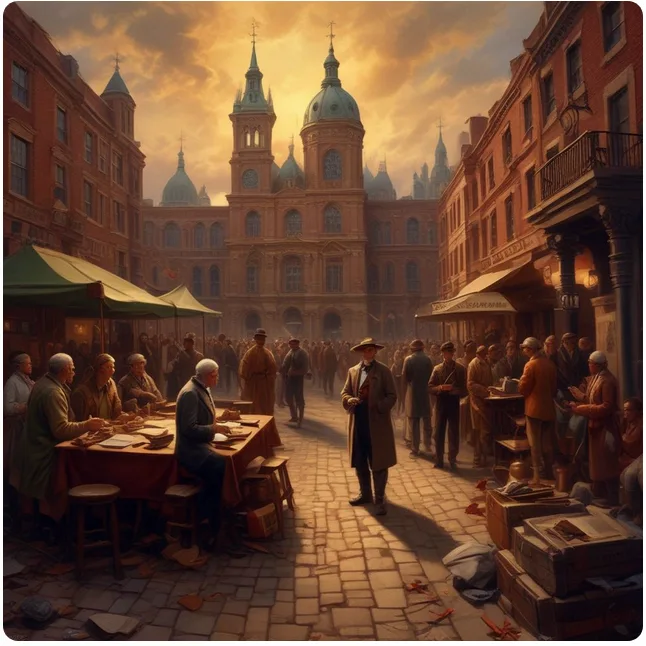

Shockingly, much of history isn’t what you learned in school—it’s what was simplified, skipped, or never mentioned at all. Behind every major event lies a deeper story filled with hidden motives, untold perspectives, and surprising twists that rarely make it into textbooks.
Go Beyond Textbooks and Discover the Truth
Interestingly, history classes are designed to teach structure, not curiosity. That means timelines, names, and events get prioritized, while the messy, fascinating, and sometimes controversial details are left out. Stick with me—I promise once you start digging differently, history will feel less like memorization and more like uncovering secrets.
1. Question the “Official” Version of Events ❗
Instead of accepting what you learned at face value, start asking deeper questions. Who wrote this version of history? What perspective is missing? Often, history is shaped by those in power, which means alternative viewpoints—especially from ordinary people—are overlooked. Once you begin questioning narratives, even familiar events start to feel completely different.
2. Explore Personal Stories and Diaries 📖
While textbooks focus on big events, personal accounts reveal what life actually felt like during those times. Letters, journals, and memoirs expose emotions, struggles, and daily realities that rarely appear in formal education. These human stories often contain the most surprising and relatable “hidden truths.”
3. Look Into Lesser-Known Events 🔍
Major wars and leaders dominate history lessons, but smaller events often carry the most unexpected insights. Strange experiments, forgotten inventions, or minor conflicts can reveal patterns and secrets that reshape your understanding of larger events. Sometimes the most fascinating facts are hidden in the footnotes.
4. Compare Multiple Sources 🌐
Reading different perspectives on the same event can completely change your interpretation. One country’s hero might be another’s villain. By comparing sources, you begin to see history as a complex puzzle rather than a fixed story.
5. Follow the “Why,” Not Just the “What” 🤔
Most people stop at what happened, but the real secrets lie in why it happened. Motivations, hidden agendas, and unintended consequences often tell a much more interesting story than the event itself.
Let’s Dive Into Hidden History
Surprisingly, the deeper you go into history, the more it starts to feel like a mystery rather than a subject. By questioning, comparing, and exploring overlooked details, you begin to uncover stories that feel almost unbelievable—but completely real. Some of these insights will make you rethink everything you thought you knew.
Powerful Ways to Discover Hidden Historical Secrets
- Dig Into “Forgotten” Figures 👤
Instead of focusing only on famous leaders, research lesser-known individuals. Scientists, rebels, writers, or everyday people often experienced events in completely different ways. Their stories can reveal surprising truths that challenge the mainstream narrative—and honestly, these are often far more interesting to read. - Explore Historical Controversies ⚖️
Every major event has debates, disagreements, and unresolved questions. Instead of avoiding these gray areas, dive into them. Controversies force you to think critically, compare evidence, and uncover details that are usually simplified or ignored in traditional learning. - Use Documentaries and Podcasts 🎧
Visual and audio storytelling can bring hidden history to life in ways textbooks can’t. Many creators focus specifically on untold stories, strange facts, or alternative perspectives. Listening to these feels less like studying and more like discovering something secret. - Search for “Accidental Discoveries” 🧪
History is full of moments where something unexpected changed everything—scientific breakthroughs, cultural shifts, or strange coincidences. These stories often get shortened in school, but when explored deeply, they reveal fascinating chains of events. - Follow Curiosity Trails 🔗
Click from one topic to another without a strict plan. One small detail can lead you into an entirely new story. This kind of exploration feels random, but it’s often how you uncover the most surprising and memorable facts.
FAQ
Q1: Why aren’t these historical secrets taught in school?
Because education systems focus on structure and essential knowledge. Many deeper or controversial details are simplified or omitted.
Q2: How can I verify hidden historical facts?
Check multiple sources, compare perspectives, and rely on credible research or academic materials.
Q3: Are alternative historical perspectives reliable?
Some are, some aren’t—always evaluate evidence and avoid jumping to conclusions without verification.
Q4: Can learning hidden history improve critical thinking?
Yes! It encourages questioning, analysis, and deeper understanding of complex topics.
Q5: Where should I start exploring hidden history?
Begin with topics you already know, then dig deeper into overlooked details or lesser-known figures.
Q6: Is learning history this way more effective?
Absolutely. It makes learning engaging, memorable, and far more meaningful.
Ready to Discover the Hidden Side of History?
Which historical event will you explore differently today? Start digging deeper, question everything, and uncover the stories that most people never hear—you might see the past in a completely new way.